

White-Label Fintech Platform
Scalable design for mobile and web — balancing complexity with clarity.
Intro
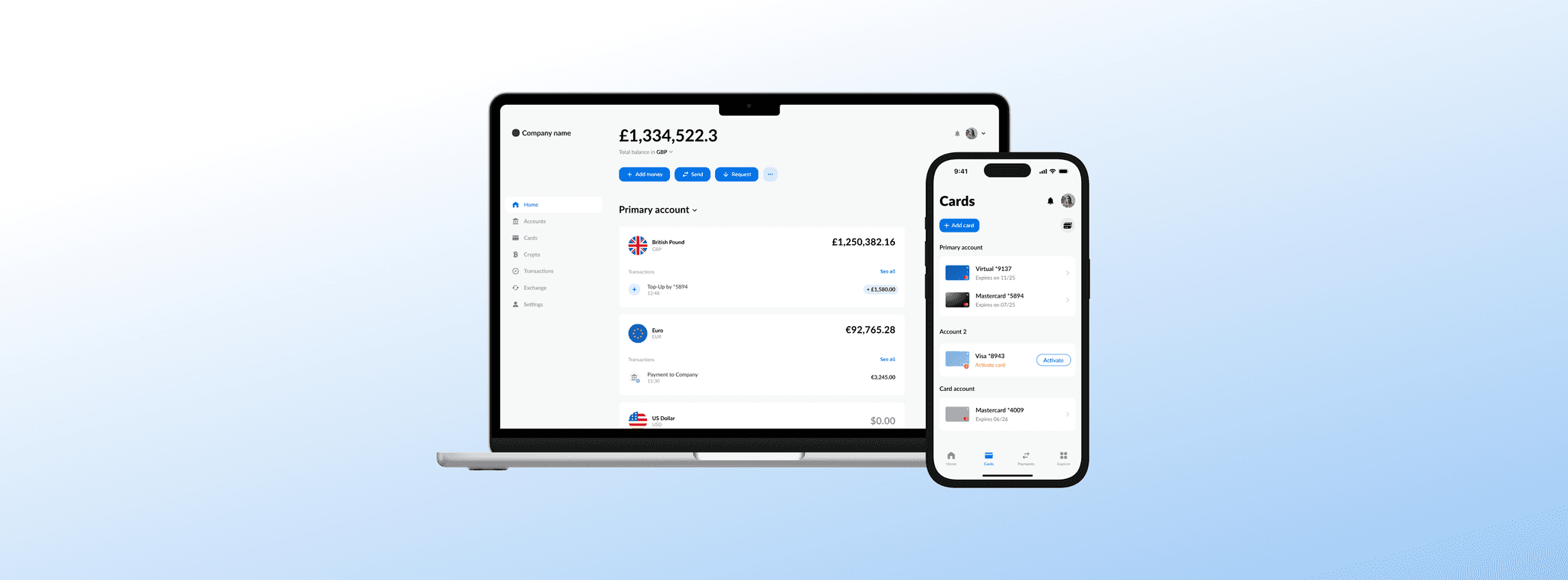
I worked on a white-label fintech platform that enables banks and fintech startups to quickly launch their own digital banking solutions. My role focused on redesigning the mobile app, maintaining the web experience, and developing a scalable design system to support multiple client customizations.
The challenge was designing for complexity: multi-currency accounts, cards, payments (SEPA, SWIFT, local, crypto), and variable flows that depend on client customization and providers. The goal was to deliver a cohesive, intuitive experience while keeping the system flexible enough for different client needs.
Problem & Goals
The existing platform faced three main issues:
- Legacy design debt — the web app carried an outdated UI, and the mobile app lacked a cohesive flow.
- High complexity — users could manage multiple accounts (mono-, multi-currency, and crypto), issue physical/virtual cards, and handle diverse payment rails.
- Scalability needs — as a white-label product, every client could customize providers, features, and flows (e.g., card activation differed depending on issuer).
My goals were:
- Modernize the mobile experience with a clearer, more intuitive UX.
- Align web and mobile design direction.
- Build a scalable, modular UI kit to reduce future design and development overhead.
My role & Approach
1. Research & Audit
🔹 Reviewed existing web and mobile interfaces to identify inconsistencies and usability gaps.
🔹 Analyzed competitors and modern fintech apps to benchmark best practices.
🔹 Mapped the most complex flows (payments, card activation etc.) to understand where flexibility was needed.
2. System Thinking
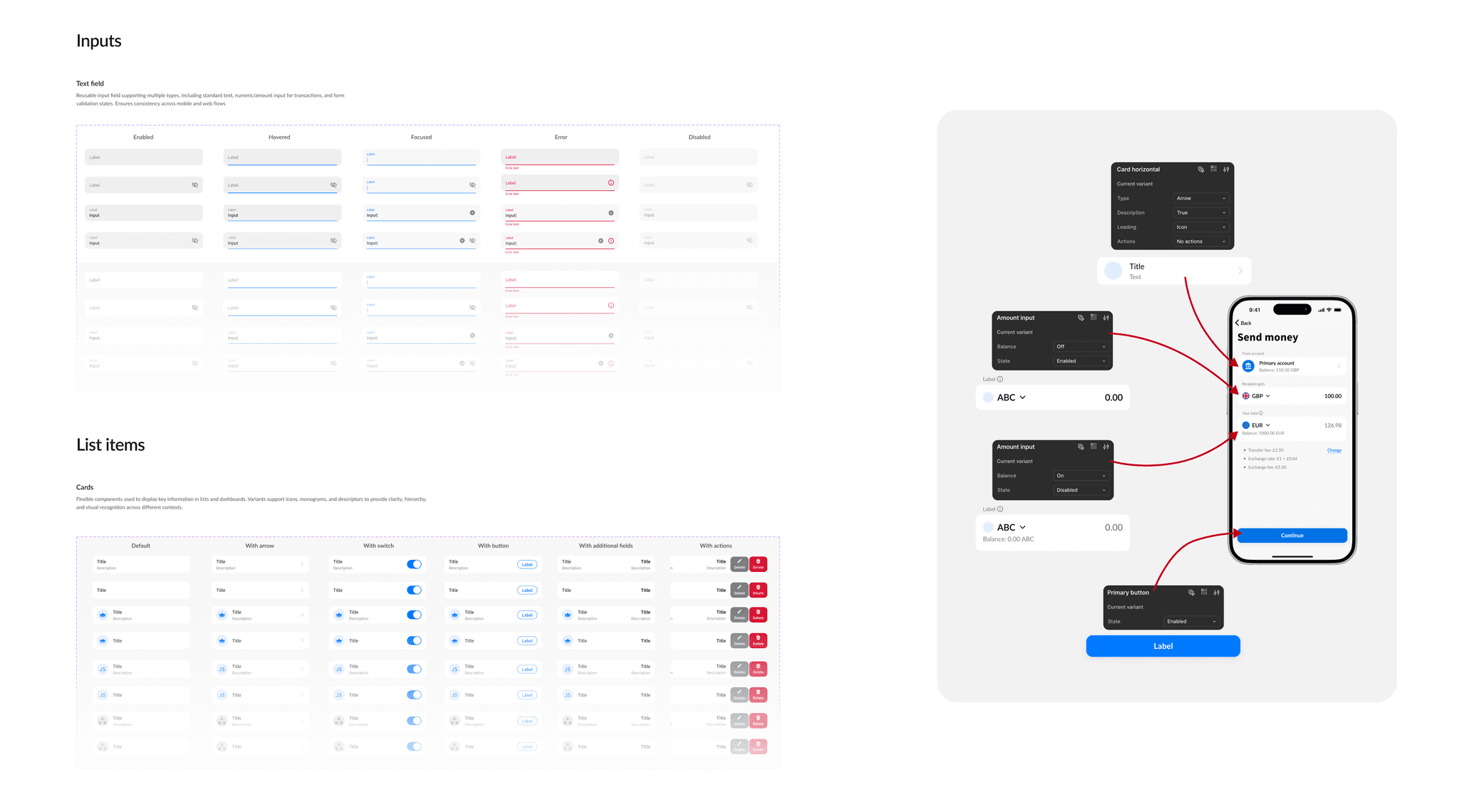
🔹 Built and maintained a lightweight design system (figma library): components, typography, colors, and interaction patterns.
🔹 Designed for modularity, ensuring flows like payments or card activation could adapt to different providers without breaking consistency.
3. Mobile Redesign
Structured flows around key use cases:
- Dashboard & multi-account management.
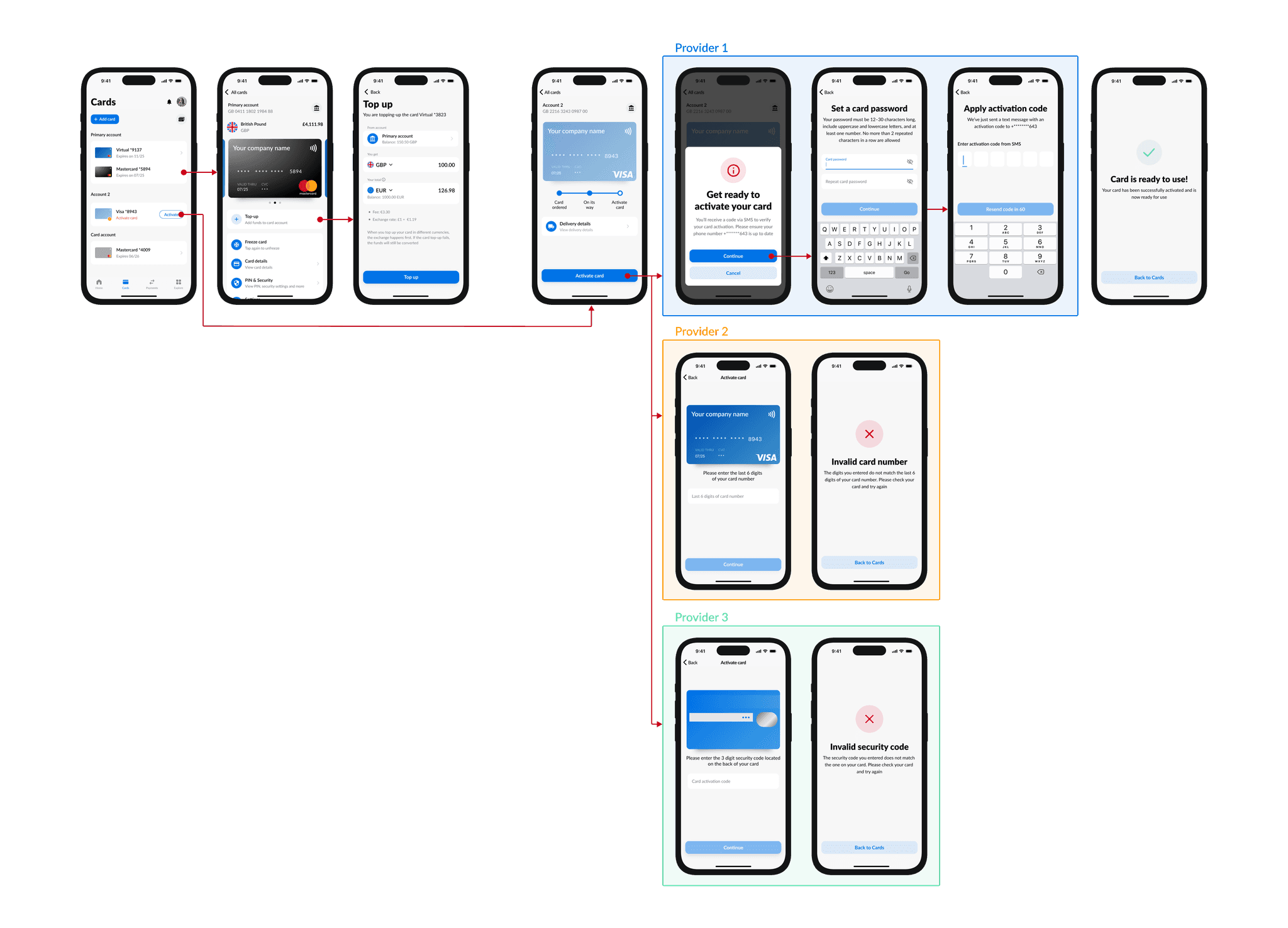
- Cards & Card activation flow.
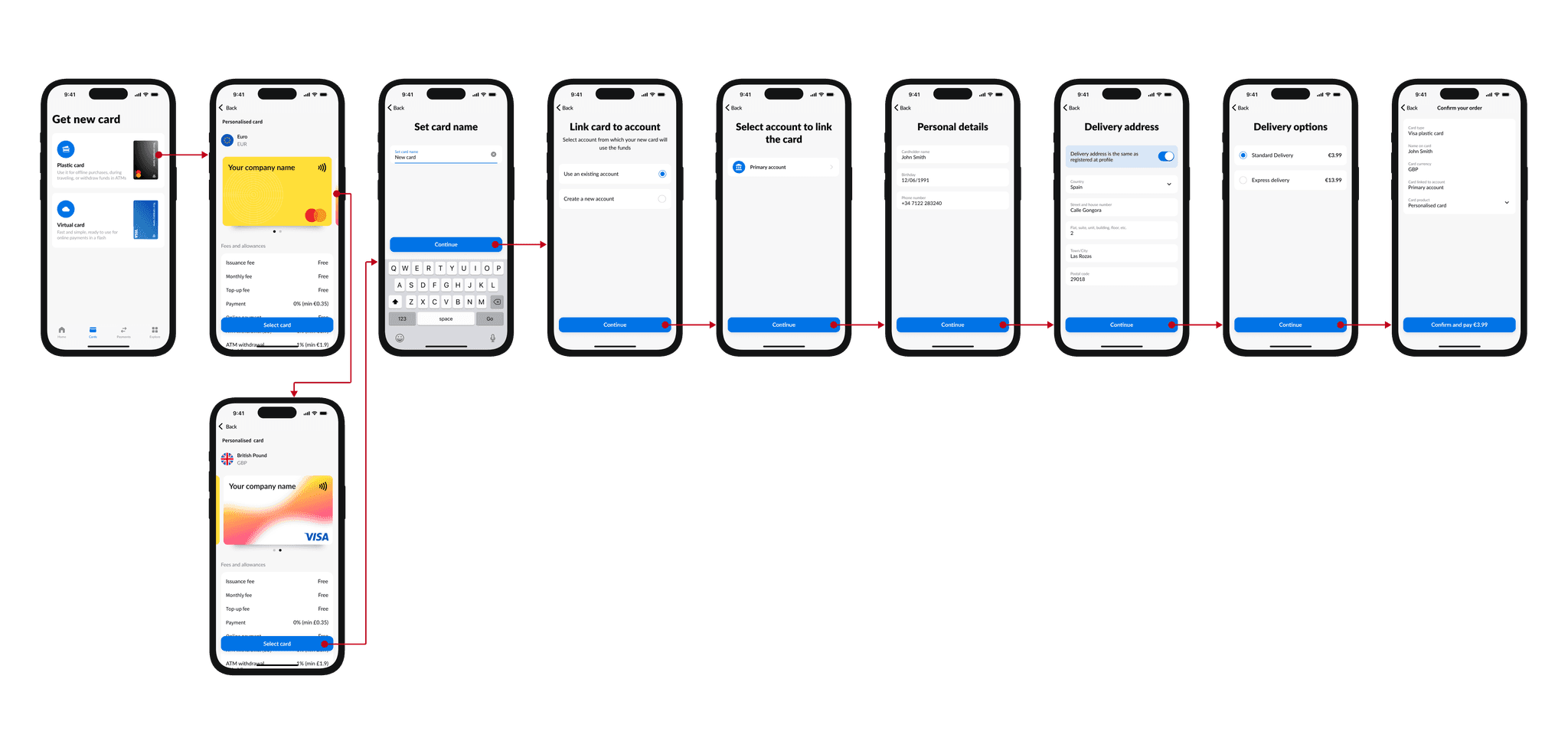
- Adding new cards flow with possibility of choosing card product.
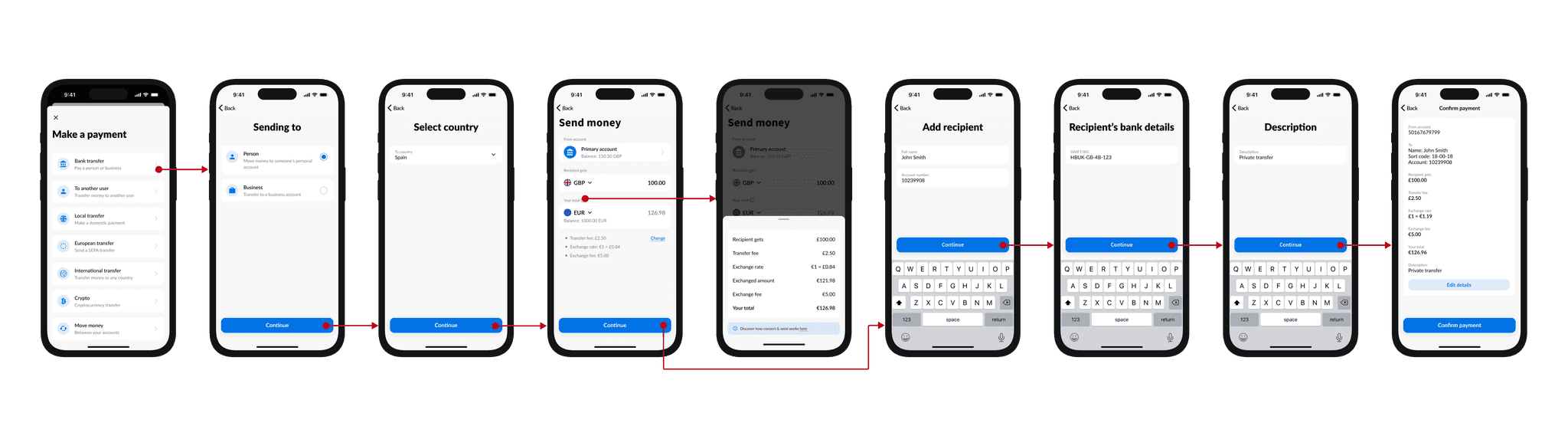
- Payments: local, SEPA, SWIFT, crypto, with optional currency exchange.
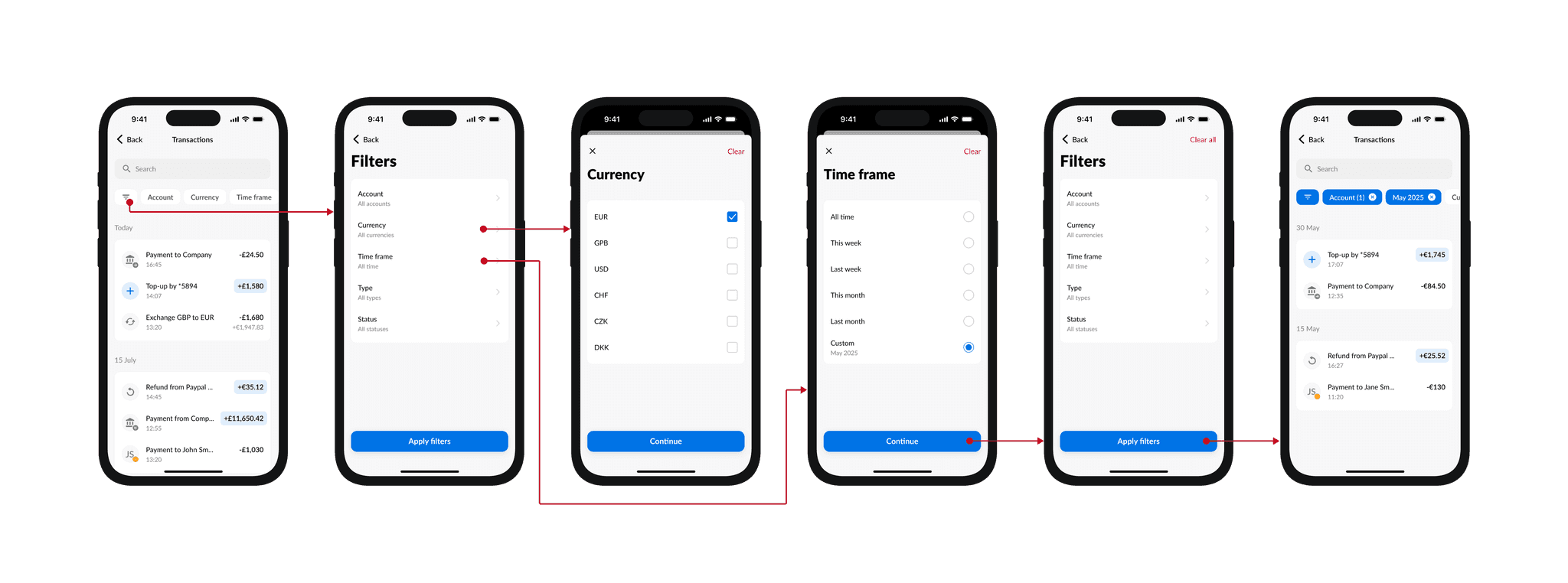
- Transaction history filter to improve discoverability and control.
4. Web Alignment
🔹 Updated essential web screens (dashboard, accounts, payments).
🔹 Created mockups where gaps existed to align with the new visual direction.
🔹 Ensured consistency across both platforms while respecting legacy constraints.
Outcomes
Mobile App
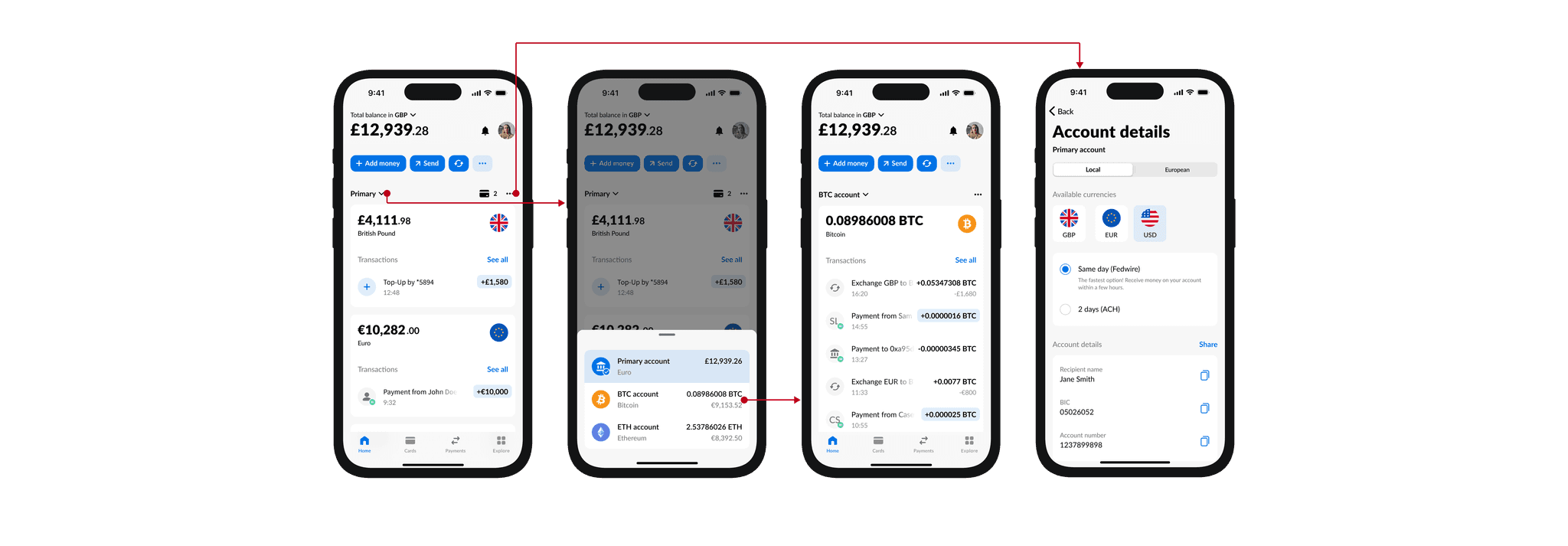
🔹 Redesigned dashboard with support for multiple account types.
🔹 Streamlined card management with adaptable activation flow (provider-dependent).
🔹 Introduced a modular card product flow — enabling users to easily add new cards, while supporting variations across providers.
🔹 Unified payments flow, with smart routing (system decides SEPA / SWIFT / Local when possible).
🔹 Improved transaction history filtering for faster search and better discoverability of past payments.
Design system
🔹 Centralized components to speed up new feature development.
🔹 Allowed quick customization for client branding and provider variations.
🔹 Reduced design duplication and simplified developer handoff.
Reflections & Learnings
This project taught me how to design for scalability and flexibility in fintech. Balancing user-friendly flows with the technical complexity of multiple currencies, providers, and white-label requirements was a recurring challenge.
By focusing on modular design and a consistent visual system, I helped make the platform easier to customize for clients, while delivering a cleaner, more intuitive mobile experience for end users.