

Kyiv Digital – Product Design Project
Designing features to make municipal parking discoverable, trusted, and easy to pay for within the city app.

About the product
Kyiv Digital is a mobile app that connects Kyiv residents and visitors with essential city services — bureaucracy-free, fast, and people-first. It covers public transport top-ups, QR tickets, parking, housing and communal notifications, and more. The product’s vision is to make everyday city life easier by keeping the city in your pocket.
Problem
The parking feature in the app was under-used: many drivers didn’t know about it, preferred offline alternatives, or believed they could avoid paying. As a result, a small percentage of users paid for parking through the app.
Objective
Increase awareness and engagement with the in-app parking feature by making it easier to discover, understand, trust, and use — ultimately raising the number of parking payments completed via Kyiv Digital.

The process
🔹 Discovery
- Market & competitive research
- Stakeholder interview
- In-depth user interviews
🔹 Define
- Value Proposition Canvas
- Ideation
- Prioritization
- Formation of product hypotheses
🔹 Design
- Wireframes
- Prototype
🔹 Test
- Usability testing for selected hypotheses
Research highlights
Top user insights
- Discovery of non-core features is poor — users only use a small subset of the app.
- Drivers want certainty about parking availability when they plan trips.
- Trust is a blocker: users want clarity about where parking money goes and reassurance about car safety.
- Speed and quick access matter — people skip long flows when rushing.
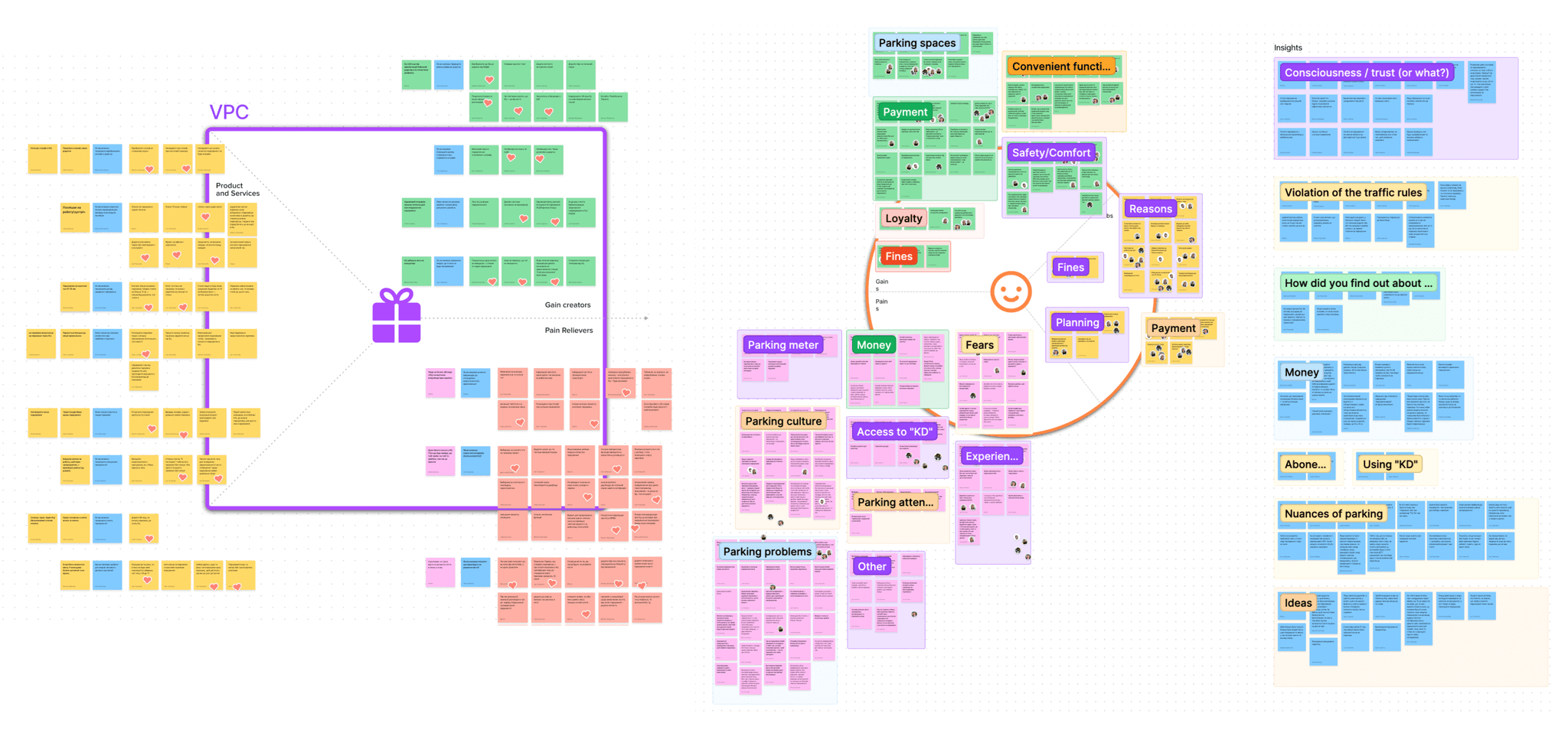
Value Proposition Canvas
We mapped customer pains, gains, and jobs using the VPC framework, then generated 160+ ideas based on interview insights.
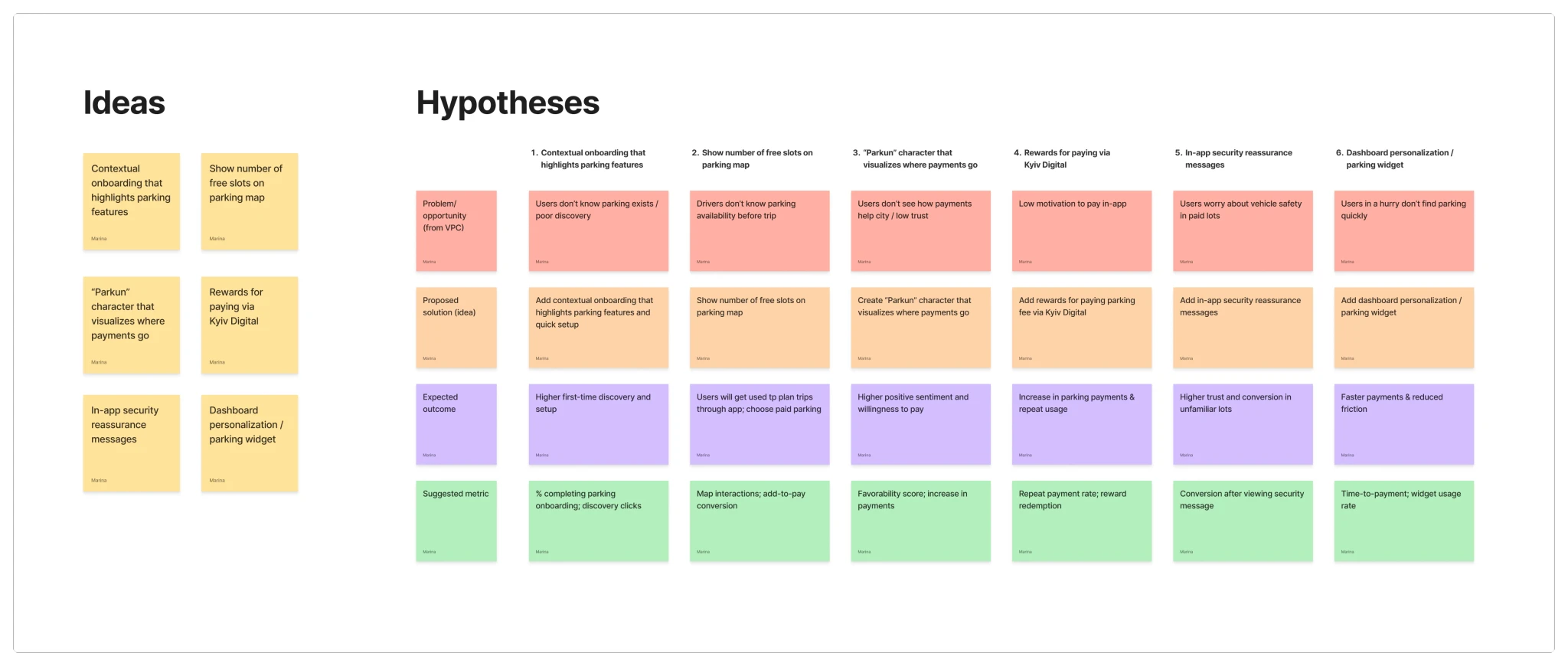
Ideas Prioritization & Hypotheses
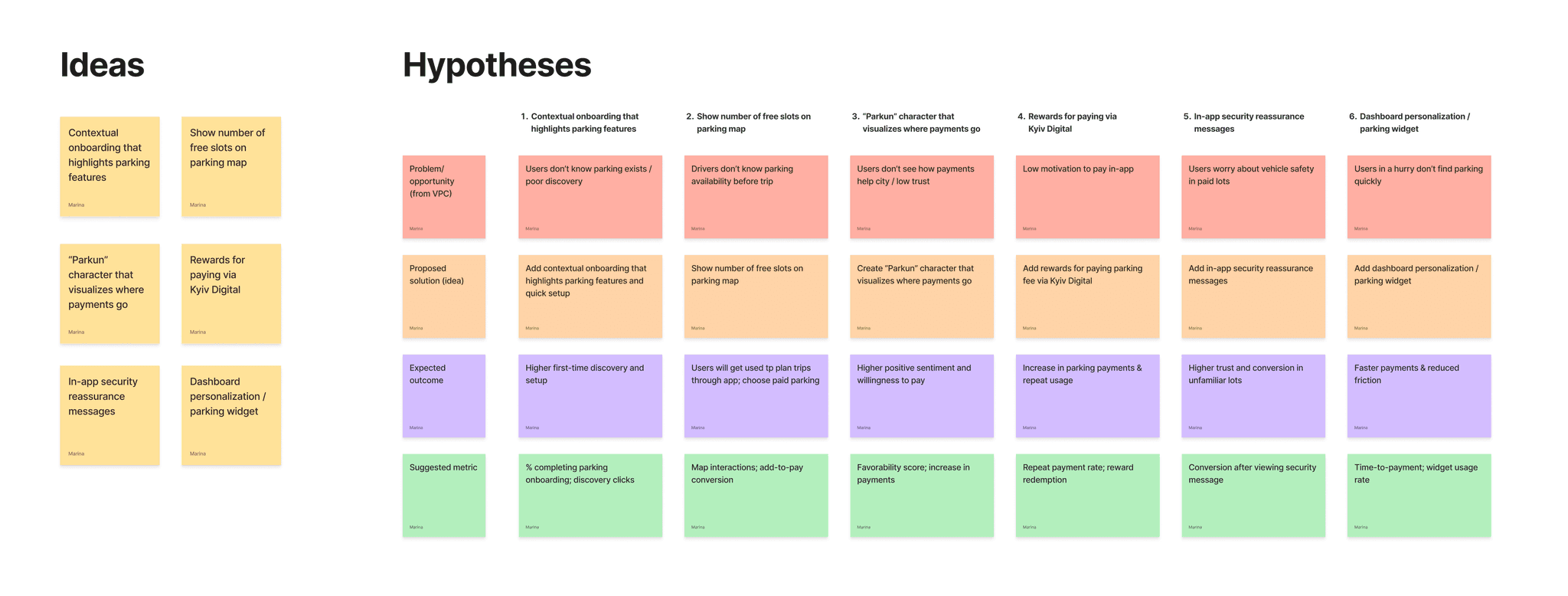
Ideas were prioritized by implementation complexity and user value. From this process, we defined six hypotheses that best balanced feasibility and impact.
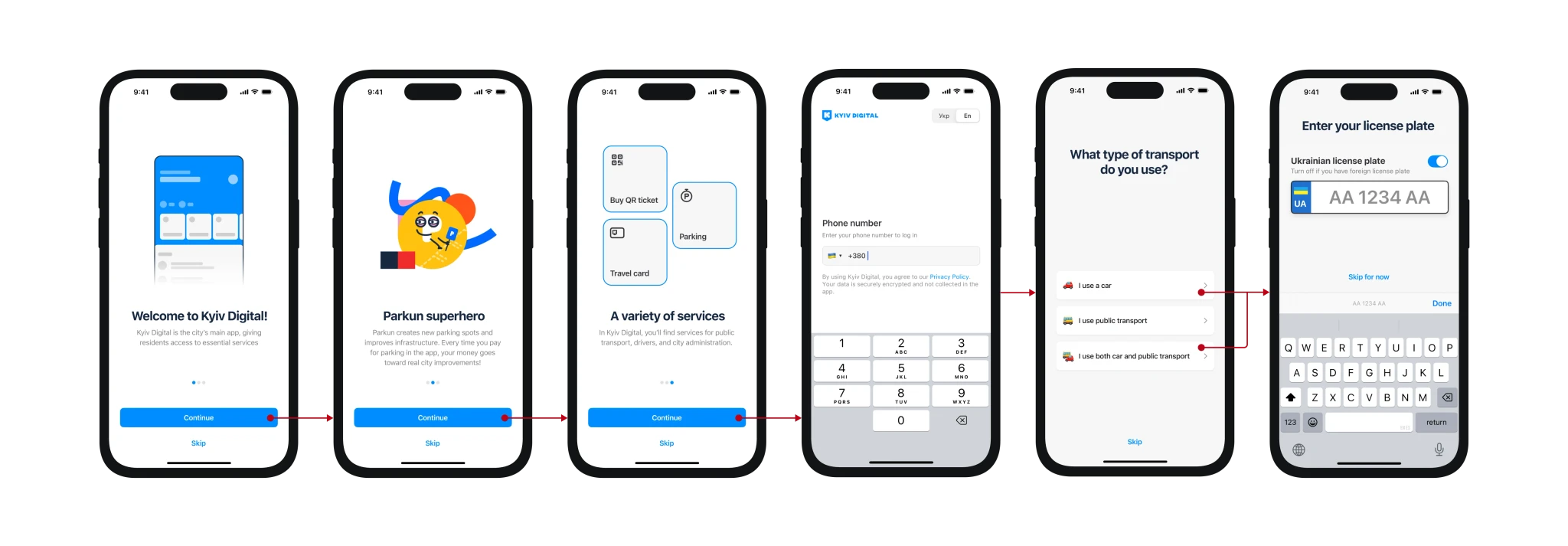
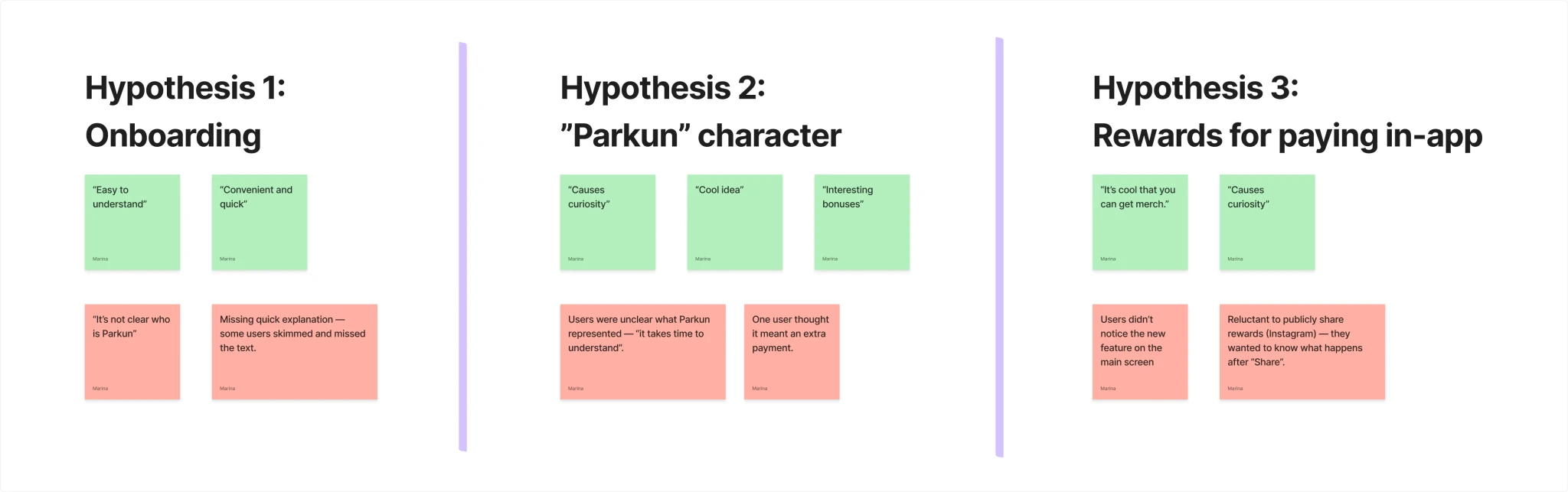
Hypothesis 1: Onboarding — highlight relevant features
A contextual onboarding that surfaces parking features and prompts quick setup, increasing discovery and first-time activation.
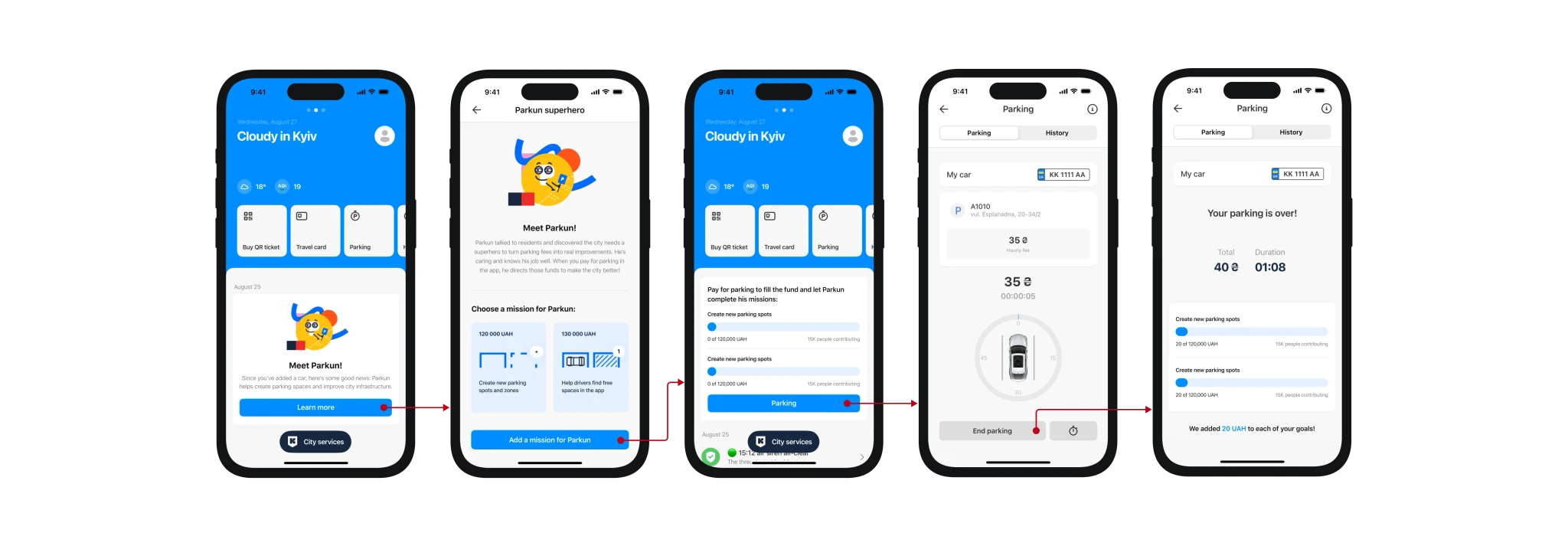
Hypothesis 2: “Parkun” character
Introduce a friendly mascot that visualizes how parking payments are invested in the city, improving transparency and positive sentiment.
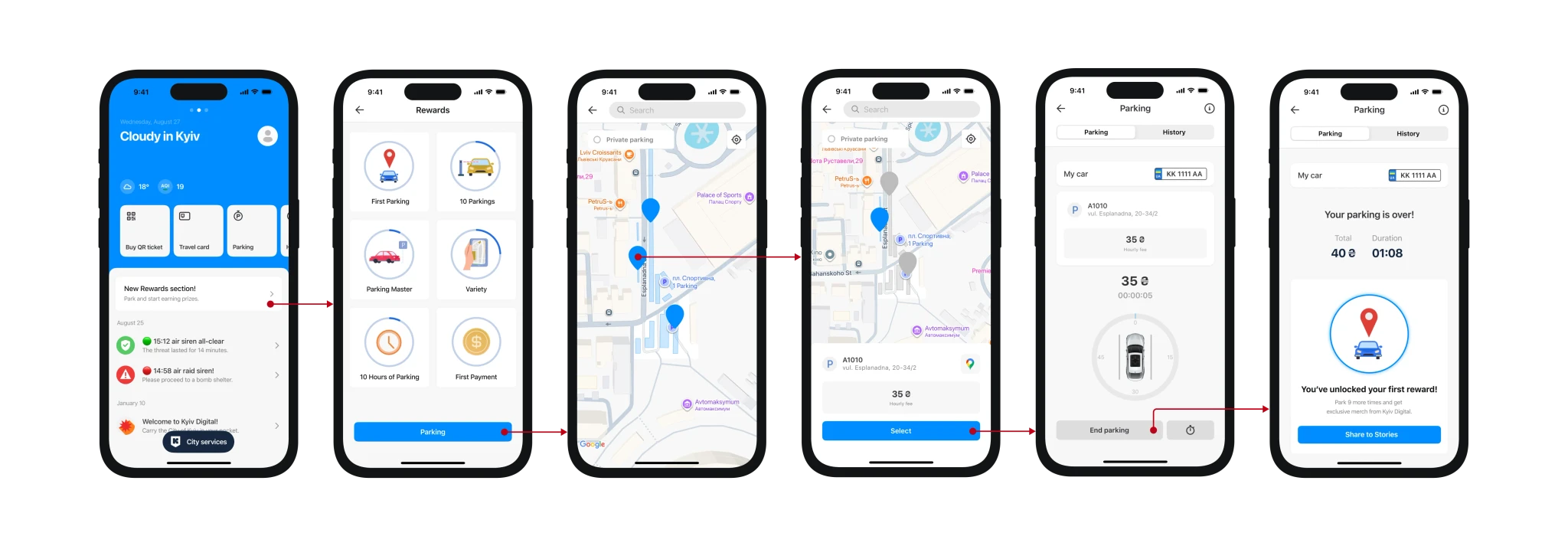
Hypothesis 3: Rewards for paying in-app
A simple, transparent rewards layer (badges / small perks) to motivate first-time and repeat in-app parking payments.
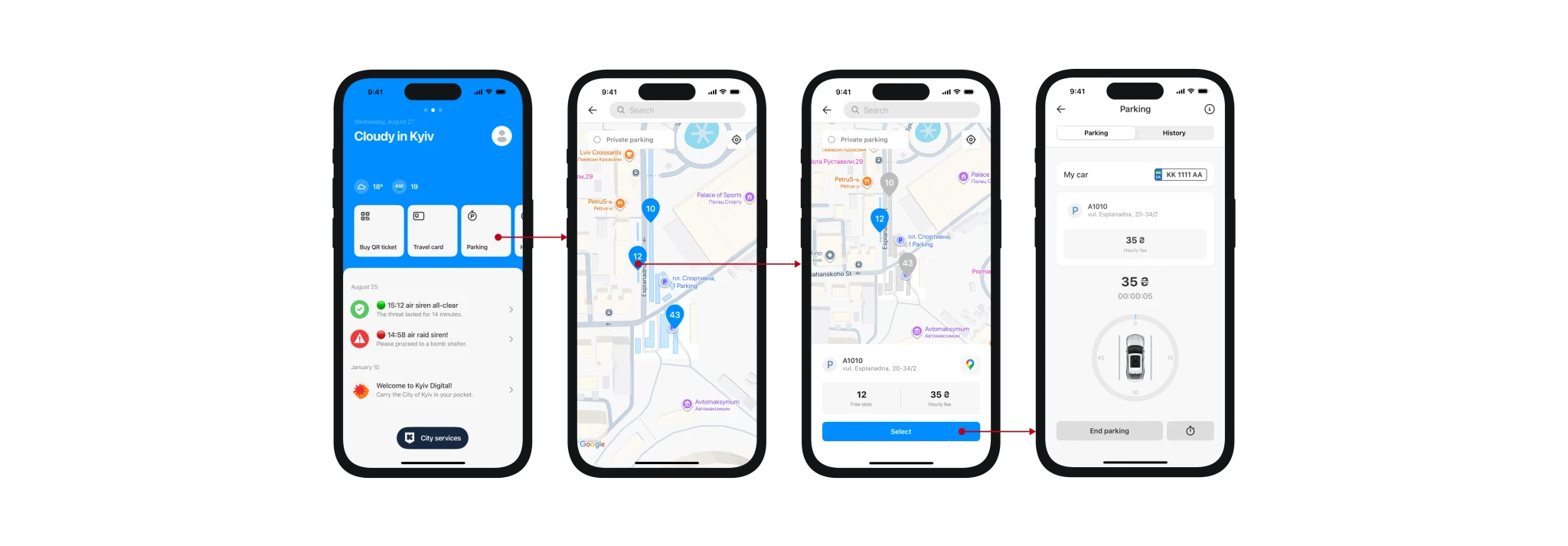
Hypothesis 4: Parking availability on map
Show live (or estimated) free-slot counts on the parking map so drivers can plan trips and confidently choose paid parking.
Hypothesis 5: In-app notifications
Short reassurance messages that highlight safety, convenience, and community benefits will reduce anxiety and increase trust in paid parking.

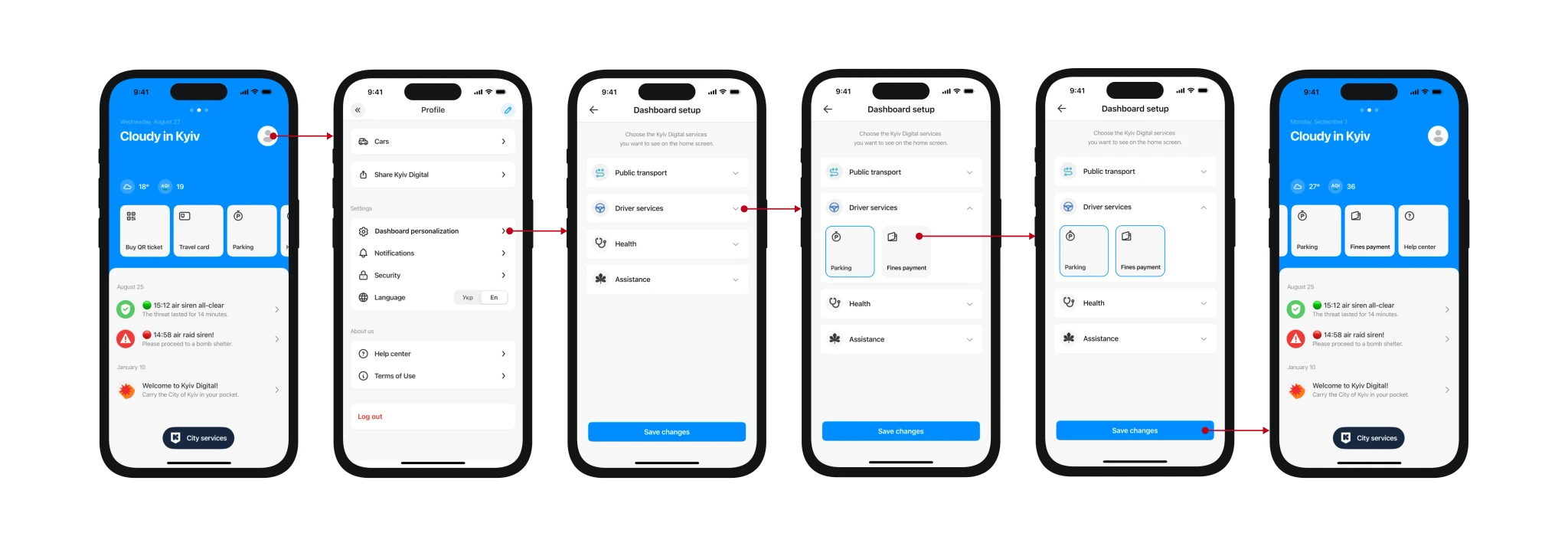
Hypothesis 6: Dashboard personalization
Allow users to add a parking widget to their dashboard for one-tap access, cutting time-to-payment when they’re in a hurry.
Concept feedback
We ran concept feedback sessions for Hypotheses 1–3 (no full usability tests or production rollout).
Conclusion & Learnings
This project allowed us to explore how to increase adoption of Kyiv Digital’s parking feature by moving from user research → idea generation → prioritized hypotheses → early concept feedback. While the work did not reach full usability testing or rollout, the process demonstrated clear user needs and gave us tangible directions for improving trust, discoverability, and motivation around paid parking.
For me, the key takeaway was practicing end-to-end product thinking: grounding ideas in research, framing measurable hypotheses, and translating them into design concepts that could be tested and iterated. The next logical step would be to refine these hypotheses into prototypes, validate them through usability testing, and measure real behavioral impact.
Team credits
This project was a collaborative effort together with Artem Usachov, Yulia Lytvynova, Maxim Kovtun, Ivan Taranenko and Mariana Ruzhytska.